
close
Choose Your Site
Global
Social Media

Views: 0 Author: Site Editor Publish Time: 2026-10-01 Origin: Site


Maintaining heavy construction equipment demands serious technical oversight. Tracking down the exact replacement components should never be the bottleneck of your maintenance schedule. Managing a massive fleet across active sites or repairing a single machine in a muddy trench requires one fundamental thing first. You need the precise part number. Unfortunately, hunting for reliable technical PDF manuals online usually leads to massive frustration. Mechanics often hit dead links, aggressive paywalls, or scanned documents so blurry they are useless.
In this technical guide, we break down exactly where to locate these essential documents securely. More importantly, we outline how to leverage these catalogs to identify exact SKUs and source them reliably to keep your operations running seamlessly.
Free Sources Available: Locate digital catalogs on B2B supplier blogs, document-sharing networks, and professional machinery forums.
Precision Eliminates Downtime: Utilizing an official PDF pinpoints the exact engineering code. This prevents catastrophic delays caused by guesswork.
Systematic Component Breakdown: Manuals segment components by specific functional systems. This allows technicians to isolate niche items swiftly.
Streamlined Procurement: Partnering with a trusted B2B supplier after securing your part number guarantees high-quality replacements arrive on site fast.
The heavy machinery sector is experiencing a rapid shift toward digital procurement and independent maintenance strategies. Recent industry search trends reveal that fleet managers are aggressively seeking direct access to technical documentation. Relying exclusively on local dealers for diagnostics creates unacceptable communication lags. By empowering in-house mechanics with offline digital PDFs, procurement teams can cast a wider net. They can source aftermarket alternatives globally, streamline their supply chain, and drastically reduce maintenance overhead.
When overseeing earthmoving machinery, precision is a non-negotiable requirement. Relying on visual approximations when sourcing spares frequently leads to operational delays and severe financial losses. An official parts catalog serves as the definitive blueprint for your specific machine model. It completely eliminates ambiguity from the procurement process.
Procurement errors in the construction sector carry heavy financial penalties. Imagine waiting two weeks for a critical hydraulic replacement. The box arrives, but the flange dimensions are off by just two millimeters. Ordering spares based on visual similarity is incredibly risky. Two hydraulic control valves might look identical on a workbench. However, they can feature entirely different internal thread pitches or pressure relief settings. Installing an incompatible element often triggers severe secondary damage across the entire hydraulic circuit.
A digital catalog provides the definitive factory code. This unique alphanumeric string ensures the item ordered matches the original engineering specifications perfectly.
Earthmoving equipment is inherently complex. These machines contain thousands of individual moving pieces functioning under extreme stress. Official manuals are logically structured to help frontline mechanics navigate this mechanical maze. Documents divide the unit into core sections like the powertrain, hydraulic architecture, electrical harness, and structural chassis.
Furthermore, these catalogs rely heavily on exploded-view diagrams. Technical illustrations visually disassemble complex assemblies into single elements. For a technician troubleshooting in a remote field, these diagrams prove invaluable. They identify the SKU while clarifying the exact reassembly sequence. This ensures crucial seals, thrust washers, and retaining rings go back together in the correct order.
Securing technical data without hitting paywalls requires strategic searching. Several reliable online repositories host free catalogs, provided you utilize the correct search methods.
Platforms like Scribd and SlideShare act as massive digital libraries. Mechanics and international dealers frequently upload manuals for public access. You can uncover hundreds of files ranging from older wheel loader schematics to modern corporate maintenance brochures.
To navigate these databases effectively, utilize specific search operators. Typing a generic term rarely works. Instead, use quotation marks to force exact matches. Searching for "ZL50G parts manual filetype:pdf" in a search engine often bypasses internal site limitations. Always verify the document language and publication date before downloading.
Many trusted B2B suppliers offer free digital downloads as a value-added resource. Suppliers recognize that an educated buyer with exact requirements is much easier to assist. These websites frequently feature dedicated technical blogs or resource centers.
Specifically, some utilize a digital pagination system. This hosts the catalog directly on their webpage. Users can browse the diagrams without downloading massive file sizes. This feature is particularly useful for mechanics accessing data via smartphone on a dusty job site.
Digital communities remain an underutilized goldmine for technical documentation. Specialized forums consist of seasoned operators who routinely share resources. Members frequently post cloud storage links containing comprehensive PDF libraries.
When utilizing these groups, always use the internal search function first. If the specific manual is missing, post a polite request. Include your exact machine model and serial number. Fellow professionals are usually highly responsive to detailed requests.
Downloading the file is merely the first milestone. Interpreting the technical data correctly is equally critical. Catalogs follow standardized formatting requiring a basic grasp of engineering documentation.
The core of any manual is the data table. These tables usually sit adjacent to the technical illustrations. A standard table contains several vital data points. The Item Number is a sequential digit corresponding directly to the visual callouts. The Part Number is the critical code used for purchasing.
You will also see a technical Description, the Quantity required per assembly, and a Remarks column. Remarks often indicate if a specific component only applies to certain serial number ranges.
Exploded views are engineering drawings showing the assembly order of various elements. Start by physically locating the broken item on your equipment. Next, find the corresponding mechanical system in the PDF index.
Locate the visual representation of your broken piece and note its specific Item Number. Finally, cross-reference that number with the adjacent table to extract the official code. This systematic approach eliminates the risk of ordering incorrect components for highly complex sub-assemblies.
Navigating a comprehensive PDF manual requires an understanding of the specific equipment you are maintaining. The structural layout varies significantly depending on the machinery category. By utilizing the correct manual, you can systematically isolate the exact spares required for a robust repair.
Wheel loaders endure immense structural stress during daily material handling. When reviewing a loader PDF, the document segments into the powertrain, hydraulic transmission, bucket assembly, and articulating chassis. Maintenance teams typically focus heavily on power transmission components.
Ordering a transmission gear with an incorrect spline count based on visual assumptions guarantees a catastrophic gearbox failure. Operators must cross-reference exploded-view diagrams to ensure compatibility. For instance, when maintaining a ZL50GN, verifying the exact torque converter specifications is mandatory. Sourcing precise XCMG wheel loader parts ensures the replacements handle the exact torque loads required by the original factory design.
Excavators rely entirely on complex hydraulic architecture to deliver breakout force. The parts catalog places heavy emphasis on fluid dynamics and high-pressure sealing networks. Mechanics must pay extreme attention to the hydraulic schematics.
The PDF details the main pump, rotary manifold, travel motors, and main control valve. These systems operate under massive pressure. A minor variance in an O-ring diameter causes severe fluid blow-by. Technicians can trace a specific high-pressure line from the boom cylinder directly back to the control valve using the manual. Procuring highly sensitive XCMG excavator parts requires matching the stringent pressure ratings dictated by the manufacturer.
Motor graders operate as precision leveling instruments. Graders require meticulous control over the moldboard to achieve exact grading tolerances. Their manuals focus extensively on the drawbar, circle, and moldboard assembly.
The PDF provides detailed breakdowns of the circle drive motor and intricate steering linkages. Wear items like moldboard cutting edges require frequent replacement. Their specific part numbers vary significantly based on the blade length. Accurate identification is non-negotiable for fleet managers looking to source XCMG motor grader parts to restore factory-level grading accuracy.
Backhoe loaders present a unique diagnostic challenge. Functioning as both a front-end loader and a rear excavator, their PDF manuals merge two distinct catalogs. The front chassis sections detail loader arms, while rear sections outline the swing post and stabilizers.
This dual functionality means maintaining twice as many hydraulic circuits. Mechanics must carefully distinguish between front and rear hydraulic valves. They might look similar but possess entirely different flow ratings. For example, verifying the exact specifications for an XC870K or XC8-2570 model is crucial. Sourcing specific XCMG backhoe loader parts, such as replacement part 800339757, prevents costly delays caused by installing a rear-hoe component on a front-loader circuit.
While structural metal brackets are relatively easy to identify, internal systems require exact documentation. Electrical and hydraulic networks are highly intolerant of incorrect replacement items.
Electrical components remain arguably the most difficult pieces to identify without official documentation. Two sensors can share identical exterior plastic housings and connectors while possessing completely different internal resistance values. Installing an incorrect sensor forces the engine control module into a restrictive limp mode.
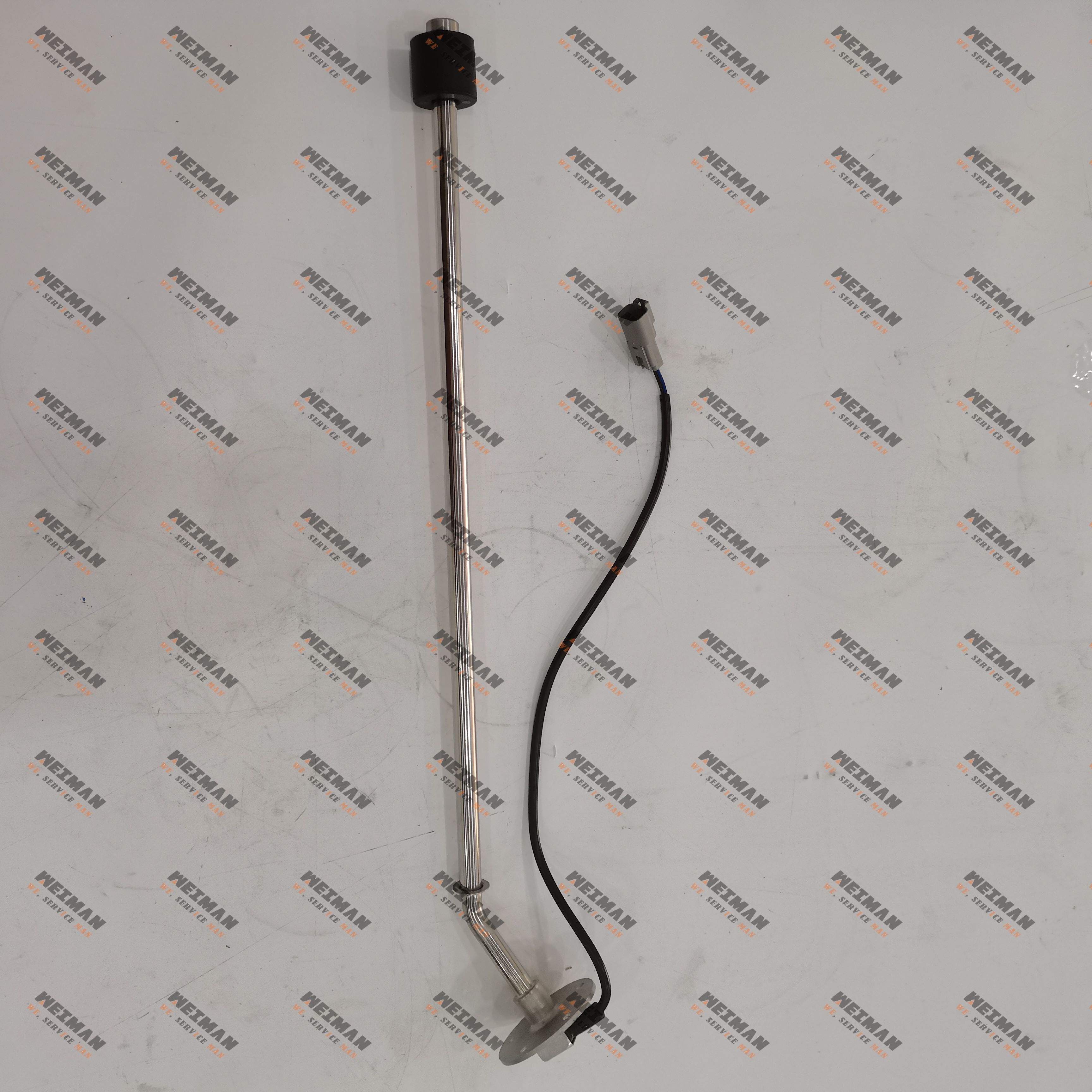
Accurately monitoring fluid levels prevents unexpected shutdowns on remote sites. If a technician needs to replace a fuel sender on a GR2205 grader, guessing is unacceptable. Checking the manual reveals the exact OEM code. Procurement teams can then confidently order the specific XCMG motor grader fuel level sensor, specifically part number 803593034 BSX-0590-01. This guarantees seamless integration with the dashboard instrumentation.
Routine maintenance dictates the majority of lifetime operating costs. Spares like brake discs, hydraulic filters, and cylinder seal kits degrade at predictable hourly intervals.
Having a downloaded PDF accessible on a rugged tablet allows teams to build proactive inventory lists. Fleet managers can look up the exact codes for 1000-hour service intervals weeks in advance. This proactive approach speeds up routine servicing and drastically reduces unexpected component failures.
Locating the correct engineering code is phase one. Executing the procurement process efficiently minimizes actual machine downtime. Armed with the exact number, you are positioned to contact B2B suppliers effectively.
Provide the supplier with a highly structured Request for Quote. A professional RFQ must include the OEM code, part description, machine model, and required quantity.
Crucially, always include the Machine Serial Number. Manufacturers frequently update internal components mid-production year. The serial number allows the supplier's technical team to cross-reference the manufacturer's database. This ensures absolute backward compatibility.
When submitting requirements, buyers face a choice between Original Equipment Manufacturer parts and aftermarket alternatives. Understanding the technical differences optimizes your maintenance budget.
Component Category | Recommended Sourcing Strategy | Technical Justification |
|---|---|---|
Engine Internals & Main Hydraulic Pumps | Strictly OEM | Requires exact metallurgical composition and micro-millimeter machining tolerances. |
Electronic Control Modules & Sensors | OEM Preferred | Ensures correct voltage mapping and prevents software communication errors. |
Ground Engaging Tools (Bucket Teeth, Edges) | High-Quality Aftermarket | Cost-effective for high-wear items; specialized aftermarket alloys often exceed factory durability. |
Cabin Glass & Basic Hydraulic Hoses | Aftermarket Acceptable | Standardized dimensions allow for safe, budget-friendly third-party replacements. |
OEM parts offer the highest assurance regarding fit and material longevity. For critical systems, OEM is the safest investment. In contrast, reputable aftermarket options offer significant cost savings for standard wear items. A trustworthy B2B supplier will objectively analyze your specific breakdown and recommend the most cost-effective path.
Relying on a digital parts catalog is a mandatory practice for modern fleet maintenance. It guarantees you purchase the correct replacement components on the first attempt. Stop wasting valuable engineering hours on endless online searches or visual guesswork that ultimately leads to extended downtime.
If you have your part numbers ready, take the next step toward minimizing your operational delays. Browse the extensive, high-quality inventory at Chinaweiman.cn. Contact our dedicated technical team today with your specific machine serial numbers for a rapid, competitive quote. Let our experts help you get your heavy equipment back into production immediately.
Yes, the vast majority of modern PDF manuals are published in bilingual formats. They typically feature English alongside the manufacturer's native language. The tabular data utilizes universally recognized Arabic numerals for item numbers and quantities. This makes it straightforward for international procurement teams to identify components accurately.
If exhaustive searches on document platforms fail, the most efficient solution is contacting a specialized B2B machinery parts supplier directly. Provide them with your equipment's exact model and serial number. Professional suppliers possess direct access to proprietary manufacturer databases. They can rapidly identify the required technical codes on your behalf.
Manufacturers frequently update engineering codes to reflect design improvements or supplier shifts. If you reference an older PDF, the code might be obsolete. However, when you submit that legacy number to a professional supplier, their inventory system automatically cross-references it. They will supply you with the newest, superseded factory replacement.
The machine serial number, or Product Identification Number, is typically stamped on a metal data plate riveted to the main exterior chassis. For wheel loaders and graders, check the front frame near the articulation joint. On excavators, it is usually located on the lower carbody or at the base of the boom. Always wipe away grease and dirt to read the stamped digits clearly before requesting quotes.
While a parts catalog is not a dedicated service repair manual, it is highly useful for troubleshooting. The exploded-view diagrams and hydraulic schematics show the exact routing of hoses, valves, and cylinders. By tracing the fluid path in the diagram, mechanics can systematically isolate which specific valve or seal is likely causing the pressure drop in the physical machine.